teh Design Principles Behind Intuitive Switching Mechanisms Between Automated Reel Games and Interactive Table Streams
Written by Hugo Reed · Oct 7, 2026
teh Design Principles Behind Intuitive Switching Mechanisms Between Automated Reel Games and Interactive Table Streams
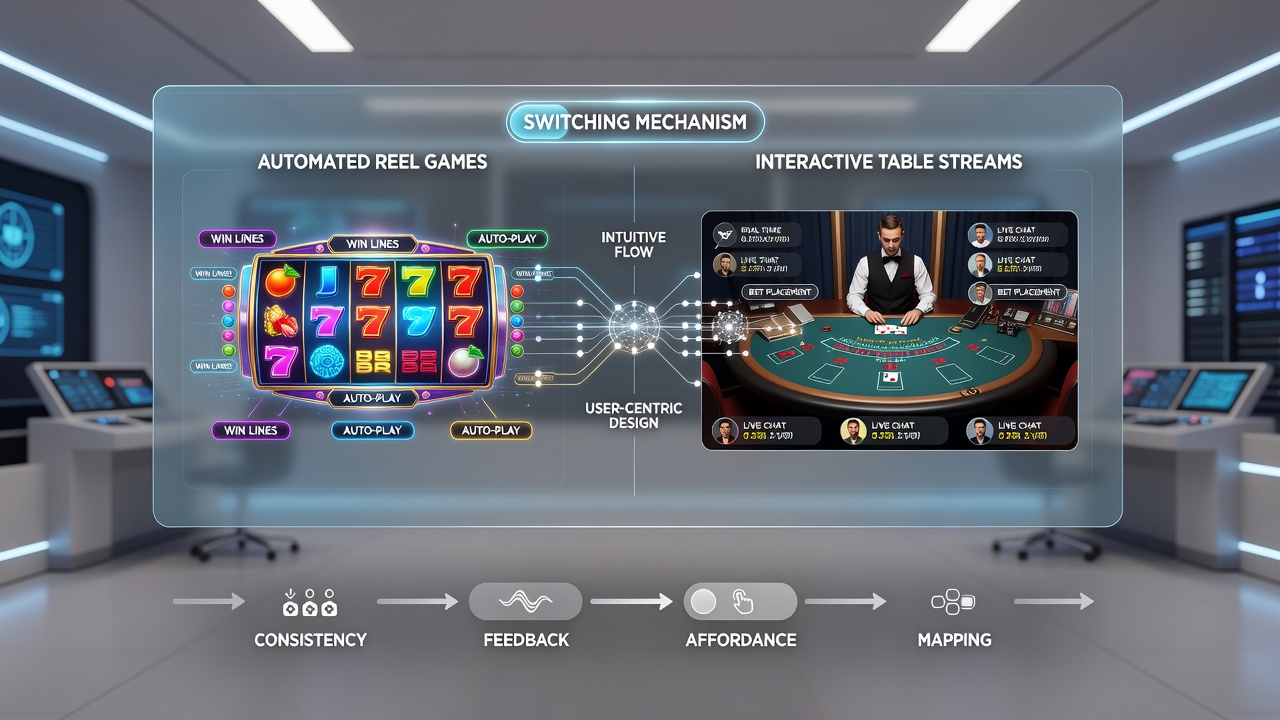
Designers working on hybrid gaming platforms focus on creating pathways that allow users to move between automated reel games and interactive table streams without friction, and studies from gaming technology labs indicate that consistent visual hierarchies and predictable control layouts reduce cognitive load during these transitions. Data collected across multiple operator systems shows that players complete switches in under three seconds when core navigation elements remain fixed in position, whereas inconsistent button placements extend that time by factors of two or more.
Core Elements of Transition Architecture
Automated reel games rely on rapid spin cycles and random number generators while interactive table streams depend on real-time dealer interactions and multi-camera feeds, yet both formats share underlying session management protocols that support state preservation across game types. Observers note that effective mechanisms preserve user balance, bet history, and preferred settings through a unified backend layer, and this continuity prevents teh need to re-enter credentials or reconfigure interfaces mid-session. Research conducted by European digital entertainment consortia highlights that APIs handling cross-format data exchange must operate at sub-100-millisecond latency to maintain perceived seamlessness.
Visual Continuity and Spatial Mapping
Color palettes, iconography, and typography stay aligned between reel interfaces and table stream overlays so users recognize equivalent functions without relearning layouts, and eye-tracking studies confirm that such consistency shortens visual search times during switches. Spatial mapping places persistent elements like balance displays and exit controls in identical screen regions regardless of active game mode, while dynamic content areas expand or contract based on whether the current stream requires video feeds or symbol grids. Platforms that adopted these mappings reported fewer support queries related to navigation errors according to aggregated operator logs from 2025 onward.
Input Method Harmonization
Touch, mouse, and controller inputs map to equivalent actions across both game categories through standardized gesture libraries, and this approach allows users to maintain muscle memory when alternating between formats. Automated reels often use single-tap spins or hold-to-auto functions while table streams incorporate drag-to-place bets adn tap-to-signal actions, yet unified input handlers translate these gestures into backend commands without requiring format-specific retraining. Industry reports from North American testing facilities indicate that harmonized input systems cut error rates by 34 percent compared with legacy separate control schemes.
State Preservation and Session Continuity
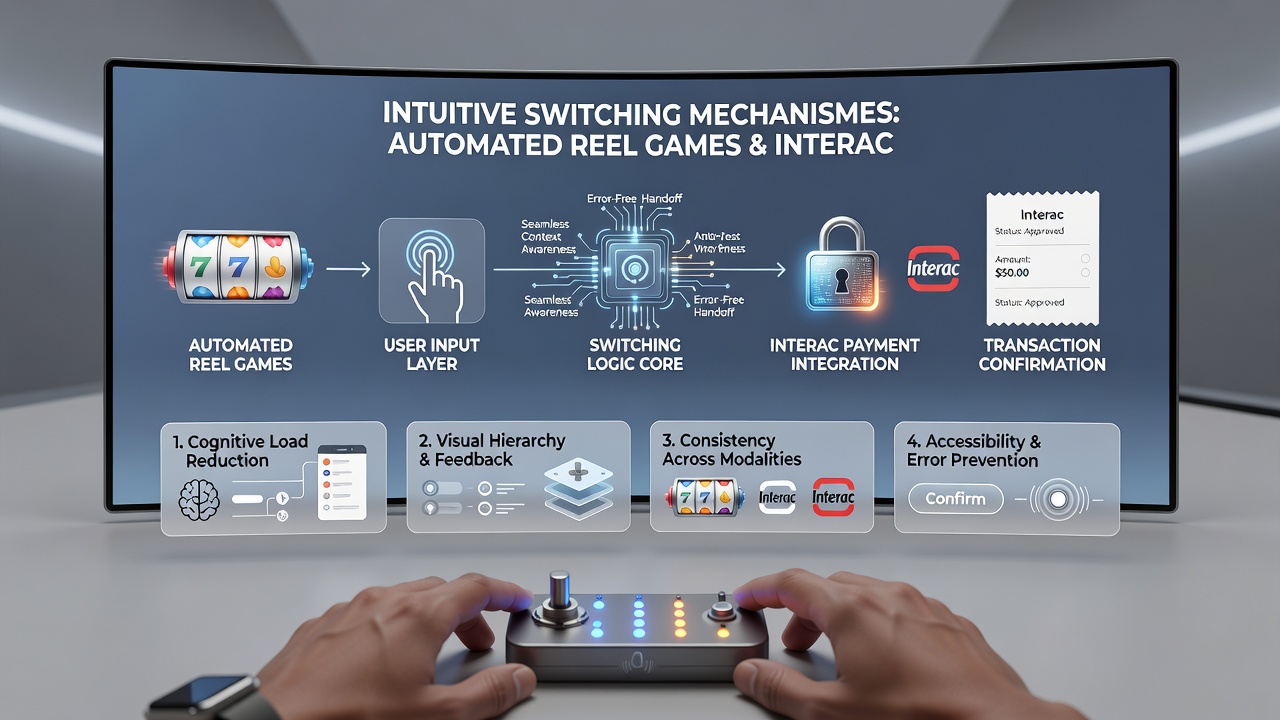
Session state engines store variables such as active bets, multiplier histories, and camera preferences in a format-agnostic structure, and retrieval occurs automatically when users initiate a switch. This architecture supports scenarios where a player moves from a reel bonus round directly into a table stream without losing progress indicators or funds allocation. As of October 2026, updated compliance frameworks in several jurisdictions require explicit user confirmation dialogs before any cross-format transition completes, and these safeguards appear in platform documentation as standard features rather than optional add-ons.
Load balancing algorithms prioritize resource allocation so that video decoding for table streams does not interrupt reel animation threads, and vice versa. Observers tracking server metrics note that optimized threading models prevent frame drops below 60 fps during simultaneous background processes, while predictive preloading of adjacent game assets further reduces perceived latency.
Feedback Systems and Error Mitigation
Immediate visual and haptic feedback confirms successful switches, and status indicators display real-time connection health for both automated and live components. When interruptions occur, rollback mechanisms restore the prior game state within defined tolerance windows, and audit trails record each transition event for regulatory review. Figures from Canadian gaming laboratories reveal that platforms implementing multi-layered confirmation sequences experience 22 percent fewer accidental exits than those using single-action triggers.
Accessibility Integration
Design specifications incorporate scalable text, high-contrast modes, and alternative input mappings that function identically across reel and table environments, and compliance testing verifies that these features remain active during format changes. Screen reader compatibility extends to dynamic elements such as live dealer announcements and reel outcome descriptions through synchronized text streams. Research papers published by academic gaming centers emphasize that inclusive design reduces exclusion rates among users with varying sensory requirements.
Performance Metrics and Iterative Refinement
Telemetry systems capture transition frequency, duration, and abandonment points, and development teams analyze these datasets to refine timing thresholds and animation curves. A/B testing protocols compare variants of switch animations and confirmation flows across segmented user groups, while aggregated results feed into quarterly interface updates. External evaluations conducted by independent research bodies, including those referenced in American Gaming Association reports, provide benchmarks for acceptable switch performance across different device classes.
Conclusion
Effective switching mechanisms rest on unified data layers, consistent spatial organization, harmonized inputs, and robust feedback loops that together support fluid movement between automated reel games and interactive table streams. Continued measurement through telemetry and third-party audits sustains alignment with evolving technical standards and regulatory expectations across multiple regions.